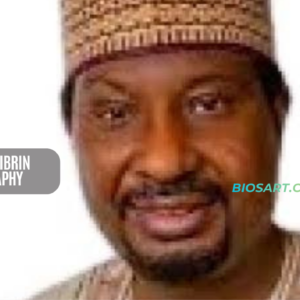
He did not arrive in politics through the conventional Nigerian pathway.
No decades of party machinery climbing. No local government chairman stint followed by state assembly followed by senate followed by governorship. No apprenticeship inside one of the established patronage networks that produce most Nigerian political careers.
Dumebi Kachikwu arrived as a businessman who decided that the country needed a different kind of candidate. Young enough to represent genuine generational change. Wealthy enough to be independent of the financial obligations that bind most politicians to the interests that funded their campaigns. Direct enough to say things that career politicians spend entire careers carefully avoiding.
Whether that approach represented genuine political viability or admirable but ultimately limited idealism is a question that the 2023 presidential election answered with data rather than sentiment.
But the data is not the whole story.
This is the full biography. His age, his background, his business career, his political campaign, his net worth, and what his presence in Nigerian electoral politics says about both the possibilities and the limits of outsider candidacies in the current democratic moment.
Who Is Dumebi Kachikwu? A Quick Overview
| Detail | Information |
|---|---|
| Full Name | Dumebi Kachikwu |
| Date of Birth | November 16, 1980 |
| Age | 44 years old (as of 2025) |
| Birthplace | Delta State, Nigeria |
| Nationality | Nigerian |
| Profession | Businessman, Politician |
| Known For | 2023 Presidential Candidate, ADC |
| Political Party | African Democratic Congress (ADC) |
| Net Worth (Est.) | $10 million+ |
Dumebi Kachikwu is a Nigerian businessman and politician who served as the presidential candidate of the African Democratic Congress in the 2023 Nigerian general election. He is one of the younger major presidential candidates in recent Nigerian electoral history and represents a specific attempt to introduce a private sector-oriented, generationally distinct voice into Nigerian presidential politics.
Dumebi Kachikwu Early Life and Background
Delta State Origins
Dumebi Kachikwu was born on November 16, 1980, in Delta State, Nigeria. Delta State is one of the Niger Delta states whose identity is shaped by the same complex relationship between oil wealth, environmental degradation, and political contestation that defines Rivers State and the broader region.
Growing up in the Niger Delta in the 1980s meant growing up in one of the most economically significant and most politically contested regions in Nigeria. The oil that funded the Nigerian state flowed from beneath the communities of the Niger Delta while those communities experienced levels of infrastructure deficit and environmental damage that created a specific political consciousness in people who grew up there.
That consciousness, the awareness of resource wealth existing alongside community underdevelopment, shaped his political thinking in ways that are visible in how he articulates his policy positions.
Family Background
He comes from a family with significant professional and public service credentials. His uncle is Ibe Kachikwu, who served as Minister of State for Petroleum Resources and Group Managing Director of the Nigerian National Petroleum Corporation under President Muhammadu Buhari from 2015 to 2019.
That family connection to the petroleum sector is not incidental to understanding Dumebi Kachikwu. Growing up with a family member at the center of Nigeria’s oil governance gave him an insider’s understanding of how the petroleum sector actually functions, how its revenues are managed, and where the gaps between stated policy and operational reality exist.
That knowledge informed his campaign messaging on petroleum sector reform and energy policy in ways that distinguished his policy articulation from candidates without similar insider proximity to the sector.
Education
He received his education across Nigerian and international institutions. His educational background reflects the pattern common among Nigerian professionals of his generation who combined local foundational education with international exposure.
His business and professional development drew from both the Nigerian private sector environment and from international business frameworks and networks. That combination of local operational experience and international perspective is a consistent thread in how he presents his policy vision.
Early Professional Development
Before his political emergence, he built his professional identity in the private sector. His business career developed across multiple sectors with a primary focus on energy, oil and gas, and related commercial activities that connected naturally to the Niger Delta context of his upbringing and the petroleum sector knowledge available through his family network.
Dumebi Kachikwu Business Career
Energy Sector Focus
His primary business activities have been concentrated in the energy sector. Nigeria’s energy landscape, encompassing oil and gas production, downstream petroleum, power generation, and the emerging renewable energy space, is one of the most complex and most commercially significant business environments in Africa.
Operating successfully in this environment requires not just commercial instincts but a sophisticated understanding of regulatory frameworks, government relationships, and the specific operational challenges of doing business in Nigeria’s resource sector.
His energy sector work gave him the commercial credibility to speak about energy policy from a position of operational experience rather than purely theoretical engagement. That credibility was central to how he positioned his presidential campaign.
Business Philosophy
He has articulated a business philosophy centered on private sector leadership in economic development. His position, consistently expressed across various platforms, is that Nigeria’s development challenges are fundamentally economic rather than primarily political and that solutions require private sector dynamism alongside competent governance rather than government-led solutions alone.
This philosophy reflects a specific generational perspective on Nigerian development. His generation came of age during structural adjustment, watched state-led development models produce limited results, and built their professional identities in private sector environments. That experience shapes a worldview that is genuinely different from the statist assumptions that underlie much of the political thinking of older Nigerian politicians.
Commercial Networks
His business activities have built commercial networks that extend across the Nigerian private sector and into international business and investment communities. Those networks provided both the financial resources and the organizational connections that made his presidential campaign viable as a logistical exercise even where it faced structural limitations in the electoral environment.
Dumebi Kachikwu Political Career
Entry Into Politics
His decision to enter presidential politics directly, without the conventional apprenticeship through lower offices that most Nigerian political careers involve, was itself a statement of political philosophy.
He has explained this decision in multiple interviews. His position is that the Nigerian political system’s conventional pathway produces politicians shaped by the system’s existing incentive structures before they ever reach positions of significant power. By the time a conventional political career produces a presidential candidate, that candidate has already made compromises and accumulated obligations that limit their ability to govern independently.
His alternative approach, entering at the presidential level with private sector financial independence and without party machinery obligations, was designed to avoid those limitations. Whether it was also designed with realistic expectations of electoral success at the first attempt is a more complicated question.
The African Democratic Congress
His presidential bid came through the African Democratic Congress, a relatively smaller political party in Nigeria’s crowded electoral landscape. The ADC is a registered political party with national spread but without the organizational depth, financial resources, or gubernatorial control that the major parties, particularly the APC and PDP, possess.
Choosing the ADC rather than attempting to contest within the major parties reflected a specific calculation. The major parties’ presidential primaries are dominated by established political networks and significant financial requirements that might have constrained his independence even if he had won a major party ticket.
The ADC provided a platform that gave him genuine candidate status without the obligations that major party affiliation would have entailed.
The 2023 Presidential Campaign
His presidential campaign in the 2023 Nigerian general election was one of the most distinctive of the multi-candidate field that contested the presidency.
Campaign Messaging
Youth and Generational Change
At 42 years old during the campaign, he was one of the youngest serious presidential candidates in the field. His campaign positioned his youth not simply as a demographic fact but as a substantive qualification. The argument was that Nigeria’s challenges required a generation of leaders who had grown up in the country’s post-military democratic era and whose professional formation was in the private sector rather than in government institutions.
Economic Reform
His policy platform emphasized economic reform with a private sector orientation. He spoke about creating an enabling environment for business, reforming the regulatory frameworks that constrain private investment, and addressing the structural economic challenges that keep Nigeria below its potential.
Petroleum Sector Reform
Given his family background and his business experience in the energy sector, petroleum policy was an area where he spoke with particular specificity and credibility. His positions on subsidy reform, NNPC restructuring, and the development of local refining capacity were more technically detailed than those of many other candidates.
Anti-Corruption Framework
He spoke about anti-corruption measures with the specific perspective of someone who had operated in the private sector and understood from operational experience how corruption functions as a tax on business activity and a constraint on economic development.
Infrastructure and Development
His development policy emphasized the role of public-private partnerships in infrastructure development, drawing on private sector models of project delivery that he argued were more efficient than purely government-executed approaches.
Campaign Style
He campaigned across Nigeria with a style that reflected his private sector background. Town hall formats, direct question and answer sessions, and media appearances where he engaged with policy questions in detail rather than retreating to the broad rhetorical statements that characterize much Nigerian political campaigning.
His social media campaign was more sophisticated than those of some larger party candidates, reflecting both the generational difference and the organizational approach of someone whose professional background involved contemporary communication tools.
The Financial Independence Dimension
One of the most discussed aspects of his campaign was his financial independence. Unlike most Nigerian presidential candidates who are deeply dependent on financial backers whose interests they must subsequently serve in office, he self-financed his campaign to a significant degree.
He spoke explicitly about this independence as both a personal choice and a policy statement. A president who does not owe his election to specific financial interests is a president who can govern in the general interest rather than the interests of campaign funders. That argument was substantive and was received seriously by commentators who engage with the structural problems of Nigerian electoral politics.
2023 Election Results
The 2023 presidential election was won by Bola Tinubu of the APC. Atiku Abubakar of the PDP and Peter Obi of the Labour Party were the other major candidates.
Dumebi Kachikwu’s vote share in the 2023 election was modest relative to the major candidates. His campaign, while visible and substantive in its policy content, did not generate the electoral breakthrough that would have demonstrated viability at the scale required for presidential success in Nigeria’s current electoral environment.
The result was not a surprise to most political analysts who had assessed the structural challenges facing minor party candidates in Nigerian presidential elections regardless of the quality of their policy platforms or personal qualifications.
Post-2023: Continued Political Engagement
His political engagement has continued following the 2023 election. He has maintained a public presence in Nigerian political commentary, continuing to articulate positions on economic policy, governance reform, and the direction of Nigerian politics.
Whether he will contest future elections, seek different offices, or find other vehicles for his political engagement remains to be seen. His stated commitment to contributing to Nigeria’s political development suggests continued involvement rather than a retreat to purely private sector activity.
Dumebi Kachikwu’s Policy Vision
Economic Policy
His economic policy framework is coherent and consistently articulated across multiple platforms and over an extended period. It reflects genuine engagement with Nigerian economic challenges rather than campaign-season policy construction.
Private Sector Primacy
His central economic argument is that sustainable Nigerian development requires a dominant and dynamic private sector rather than a state-led model. This involves reducing the regulatory burden on business, improving contract enforcement, and creating genuine macroeconomic stability that allows long-term investment planning.
Foreign Investment Attraction
He has spoken extensively about what Nigeria needs to do to attract serious foreign direct investment rather than the speculative and extractive investment that has characterized significant portions of foreign engagement with the Nigerian economy.
Small and Medium Enterprise Development
Beyond the large-scale investment discussion, his economic framework includes attention to the SME sector that employs the majority of Nigerians and that requires different policy interventions than large corporation-focused frameworks provide.
Monetary and Fiscal Policy
His positions on monetary policy, exchange rate management, and fiscal responsibility reflect a business operator’s perspective on the macroeconomic conditions that enable or constrain productive economic activity.
Energy Policy
His energy policy positions are among the most technically detailed in his public output.
Petroleum Sector
He has spoken about the need for genuine commercialization of the NNPC, the removal of petroleum subsidies with appropriate social safety net replacements, the development of domestic refining capacity, and the reform of the regulatory frameworks governing upstream and downstream petroleum activities.
Power Sector
Nigeria’s power sector crisis is among the most significant constraints on economic development. His positions on power sector reform emphasize the role of private investment, the reform of the distribution company framework, and the development of off-grid and renewable solutions alongside conventional grid expansion.
Energy Transition
He has engaged with questions about Nigeria’s energy transition in the context of global climate change commitments, arguing for an approach that balances legitimate development aspirations with environmental responsibility.
Governance Reform
His governance reform positions reflect his political philosophy about the relationship between state capacity, private sector activity, and development outcomes.
Anti-Corruption
He has spoken about anti-corruption not primarily as a law enforcement challenge but as an institutional design challenge. The argument is that reducing the incentive and opportunity for corruption requires institutional structures that limit discretionary power rather than simply prosecuting those who exercise it corruptly.
Federalism and Devolution
His positions on Nigerian federalism generally favor greater devolution of power to states and local governments, consistent with his broader philosophy about the limitations of centralized government management of complex development challenges.
Electoral Reform
He has spoken about electoral reform as a prerequisite for the kind of leadership quality improvement that he argues Nigeria requires. His campaign’s emphasis on financial independence from special interests connects to his position that electoral finance reform is essential to governance quality improvement.
Dumebi Kachikwu Net Worth: The Complete Picture
Estimated Net Worth
Dumebi Kachikwu’s net worth is estimated at $10 million or more as of 2025. This figure reflects his business activities in the energy sector and related commercial areas across his career.
He is not among Nigeria’s wealthiest business figures by the standard of the country’s most prominent billionaires. His wealth is sufficient to have funded a credible presidential campaign without dependence on external financial backers, which was itself one of the defining features of his political positioning.
Sources of Wealth
Energy Sector Business
His primary commercial activities in the energy sector constitute the main source of his wealth. Energy sector businesses in Nigeria that operate successfully generate significant returns given the scale of the sector and the margins available to operators who navigate its challenges effectively.
Investment Activities
His commercial network and capital have been deployed across various investment activities beyond his core energy sector operations.
Consulting and Advisory
His expertise in the energy sector and his knowledge of Nigerian regulatory frameworks generate consulting and advisory income from entities seeking guidance on Nigerian market entry and operations.
The Self-Funding Political Statement
His decision to self-fund his presidential campaign deserves specific discussion as a dimension of his net worth story.
Running a credible presidential campaign in Nigeria requires significant financial resources. The logistics of national campaign operations, the media presence required for serious visibility, the organizational infrastructure needed to contest across 36 states and the FCT, all of these generate substantial costs.
His ability to fund this exercise from personal resources without dependence on major financial backers was itself a demonstration of financial substance. It also validated his central campaign argument about the importance of financial independence for genuine political independence.
Dumebi Kachikwu Personal Life
Family and Personal Background
He has maintained a relative degree of personal privacy compared to his public political activity. His family life has not been a central subject of his public communications, which have focused predominantly on policy and political philosophy.
His Delta State background and his family connections to the petroleum sector through his uncle Ibe Kachikwu are the most publicly documented dimensions of his personal background.
Public Persona
His public persona is consistent across different platforms and contexts. He is articulate, policy-focused, and willing to engage with difficult questions about Nigerian governance challenges in specific rather than rhetorical terms.
He communicates in English with a clarity and directness that reflects his private sector professional background. His communications style is more corporate presentation than political rally, which is both a genuine reflection of who he is and a factor in his electoral challenges in a political environment where mass mobilization often requires different communication registers.
Digital Presence
He has maintained an active digital presence across social media platforms, engaging with Nigerian political commentary, responding to critics, and consistently articulating his policy positions. His digital engagement reflects his generational position as someone who uses social media as a genuine communication tool rather than a purely managed PR channel.
Dumebi Kachikwu’s Significance in Nigerian Political Context
What His Candidacy Represented
His 2023 presidential candidacy represented several things simultaneously that are worth disaggregating.
Generational Representation
He was among the youngest serious presidential candidates in the 2023 field. His candidacy was part of a broader generational conversation in Nigerian politics about when and how power transitions to the generation that grew up in democratic Nigeria rather than in the military era.
Private Sector Perspective
His campaign brought a private sector operational perspective to policy questions that are often dominated by career politicians and academics. That perspective is not automatically correct but it is genuinely different and represents a constituency of Nigerian professionals whose experience and views have historically been underrepresented in electoral politics.
Financial Independence Model
His self-funding approach raised questions about the possibilities and limits of financial independence in Nigerian electoral politics. His campaign demonstrated that a financially independent candidacy was logistically possible. His electoral result suggested that financial independence alone does not overcome the structural advantages of major party organization and establishment.
Policy Seriousness
His campaign set a standard of policy specificity that raised the quality of policy discussion in the 2023 presidential race. Candidates who engage seriously with policy force other candidates and the public to engage more seriously as well.
The Outsider Candidacy Question
His candidacy invites reflection on a question that Nigerian democracy will continue to face. Can genuinely independent candidates without major party backing and establishment support compete seriously for the presidency in the current electoral environment?
The honest answer from the 2023 evidence is that the structural barriers, the major party organizational advantages, the financial requirements of truly national campaigns, and the pattern of voting behavior in a multiethnic federal state, remain formidable constraints on outsider candidacies regardless of the quality of the candidate or the seriousness of their policy platform.
That assessment does not diminish what his candidacy accomplished within those constraints. It simply locates it accurately within the political landscape it contested.
Future Political Relevance
His continued engagement with Nigerian political commentary and his maintained public profile suggest that his political career is not concluded by the 2023 result.
The questions are about form rather than whether. Will he contest again at the presidential level. Will he seek a different office that provides a more direct pathway to national political impact. Will he find ways to influence Nigerian policy from outside electoral politics through advocacy, investment, and public engagement.
His age, 44 as of 2025, means that multiple electoral cycles remain available to him if he chooses to pursue them.
Frequently Asked Questions About Dumebi Kachikwu
How old is Dumebi Kachikwu?
Dumebi Kachikwu was born on November 16, 1980. He is 44 years old as of 2025.
What is Dumebi Kachikwu’s net worth?
His net worth is estimated at $10 million or more as of 2025. His wealth is primarily generated through his business activities in Nigeria’s energy sector and related commercial operations.
What political party does Dumebi Kachikwu belong to?
He is a member of the African Democratic Congress, through which he contested the 2023 Nigerian presidential election as the party’s flag bearer.
What did Dumebi Kachikwu run for in 2023?
He ran for President of Nigeria in the February 2023 general election as the presidential candidate of the African Democratic Congress.
What is Dumebi Kachikwu’s connection to Ibe Kachikwu?
Ibe Kachikwu, former Minister of State for Petroleum Resources and former Group Managing Director of the NNPC, is his uncle. This family connection gave him proximity to Nigeria’s petroleum sector governance that informed his energy policy positions.
Where is Dumebi Kachikwu from?
He is from Delta State, Nigeria, one of the Niger Delta states in southern Nigeria. The Niger Delta context shaped his political consciousness and his understanding of the relationship between resource wealth and community development.
What is Dumebi Kachikwu’s educational background?
He received education across Nigerian and international institutions with a focus that prepared him for private sector commercial activity. His business and energy sector professional development complemented his formal education.
What were the main policy positions of Dumebi Kachikwu’s 2023 presidential campaign?
His main policy positions included private sector-led economic development, petroleum sector reform including subsidy removal with social safety net alternatives, power sector restructuring to attract private investment, anti-corruption institutional reform, and electoral reform to reduce the influence of money in Nigerian politics.
Why did Dumebi Kachikwu choose the ADC rather than a major party?
He has explained his choice of the ADC as reflecting his desire for genuine political independence. Major party presidential primaries in Nigeria require engagement with established patronage networks and significant financial obligations that he argued would compromise the independence he considers essential for genuine governance reform.
What is Dumebi Kachikwu doing now?
He continues to be engaged with Nigerian political commentary and public discourse. His specific activities following the 2023 election include continued social media engagement on policy and political questions and participation in public discussions about Nigerian governance and economic challenges.
Conclusion: The Candidacy That Asked the Right Questions
Dumebi Kachikwu did not win the 2023 Nigerian presidential election.
That fact is documented and clear.
What is equally documented and equally clear is that his campaign asked questions that the Nigerian political conversation needed asking and that his presence in the presidential race raised the quality of policy engagement in a cycle that needed it.
What does a president who does not owe his election to financial backers look like. What does energy policy made by someone with operational understanding of the sector rather than purely political calculation look like. What does a presidential campaign conducted by someone young enough to have grown up in democratic Nigeria rather than in the military era look like.
These are not rhetorical questions. They are substantive ones that the 2023 election posed and that Nigerian democracy will continue to need answers to.
He is 44 years old. The political career that the 2023 campaign opened rather than closed has multiple chapters still unwritten.
Whether those chapters involve another presidential bid, a different electoral office, or a form of political engagement that operates outside conventional electoral frameworks, the questions his 2023 campaign raised will not disappear.
Nigerian democracy needs people willing to contest on the basis of policy substance and financial independence rather than patronage network mobilization. His 2023 campaign demonstrated that such a candidacy is possible even where it has not yet proven sufficient.
The sufficient part is a work in progress.
At 44 years old, so is he.