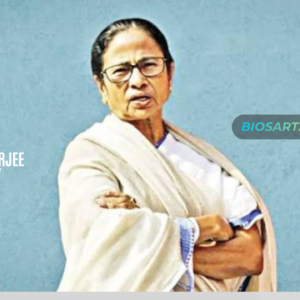
She entered politics through marriage.
That is the conventional narrative about Dimple Yadav and it is not entirely wrong. Her husband is Akhilesh Yadav, former Chief Minister of Uttar Pradesh and president of the Samajwadi Party. Her father-in-law is Mulayam Singh Yadav, who founded the Samajwadi Party and dominated Uttar Pradesh politics for decades. The political dynasty she married into is one of the most powerful in Indian state-level politics.
But the conventional narrative misses something important.
She won elections. Repeatedly. In constituencies that she had to earn rather than inherit. Against serious opposition in India’s most populous and most politically complex state. With a public presence that developed from reluctant political entrant to confident parliamentary voice across more than a decade of active political engagement.
The woman who initially appeared to be a political accessory to her husband’s career became something more specific and more interesting. A politician with her own electoral record, her own constituency relationships, and her own developing voice on the issues that matter to the people who vote for her.
This is the full biography. Her age, her background, how she entered political life, the complete story of her parliamentary career, her relationship with Akhilesh Yadav and the Samajwadi Party dynasty, and what her political presence means in the broader context of women’s participation in Indian democracy.
No shortcuts. The complete picture.
Who Is Dimple Yadav? A Quick Overview
| Detail | Information |
|---|---|
| Full Name | Dimple Yadav |
| Date of Birth | January 15, 1978 |
| Age | 47 years old (as of 2025) |
| Birthplace | Dehradun, Uttarakhand, India |
| Nationality | Indian |
| Husband | Akhilesh Yadav |
| Father-in-Law | Mulayam Singh Yadav |
| Political Party | Samajwadi Party |
| Constituency | Mainpuri, Uttar Pradesh |
| Net Worth (Est.) | ₹50 crore+ |
Dimple Yadav is an Indian politician and Member of Parliament representing the Mainpuri constituency in Uttar Pradesh. She is the wife of Samajwadi Party president Akhilesh Yadav and the daughter-in-law of the late Mulayam Singh Yadav. She has served in the Lok Sabha across multiple terms and has developed a political identity that extends beyond her family connections into genuine constituency representation.
Dimple Yadav Early Life and Background
Dehradun Origins
Dimple Yadav was born on January 15, 1978, in Dehradun, the capital of what is now Uttarakhand state. Her birth name was Dimple Rawat before her marriage.
Dehradun is a hill city in the Himalayan foothills with a distinctive identity shaped by its military cantonment heritage, its educational institutions including the prestigious Doon School, and its position as the administrative capital of a state known for its natural beauty and its distinctive hill culture.
Her background in Dehradun is geographically and culturally distant from the Yadav heartland of Uttar Pradesh that her political career would eventually be rooted in. The distance between her personal origins in Uttarakhand’s hill culture and the political terrain of Uttar Pradesh’s Yadav-dominated politics is one of the less examined but genuinely interesting dimensions of her biography.
Family Background
She comes from a family with military connections. Her father Colonel Rawat served in the Indian Army. Growing up in a military family in Dehradun gave her exposure to a specific culture of discipline, service, and national identity that is distinct from the political culture she later entered through marriage.
Military families in India move frequently across postings, which typically produces individuals with broader geographic exposure and adaptability than those rooted in single communities. This background may have contributed to her ability to build constituency relationships in a political environment very different from her own origins.
Education
She completed her schooling in Dehradun. Her educational background before marriage did not include a specific focus on political science or public administration in the way that some politicians’ educational histories do.
Her formation before entering political life was that of someone whose pathway to politics was not anticipated or planned for through educational choices but arrived through the specific circumstances of her marriage into one of India’s most significant political families.
Meeting and Marriage to Akhilesh Yadav
Her marriage to Akhilesh Yadav on November 24, 1999, was the pivotal event that placed her on the trajectory her subsequent life followed.
Akhilesh Yadav was at that point already embedded in Samajwadi Party political life as the son of Mulayam Singh Yadav, who was himself one of Uttar Pradesh’s most powerful politicians. The marriage connected her to a political dynasty at a moment when that dynasty was approaching the height of its influence.
The specific circumstances of how they met and the nature of their relationship before marriage are not extensively documented in public sources. What is documented is that the marriage has been sustained across more than two decades of intense political life, significant political pressures, and the specific demands of being a prominent political couple in India’s most watched state.
She has spoken about her marriage in various interview contexts with consistent warmth and evident genuine partnership rather than the more formal political alliance language that sometimes characterizes political couple communications.
Dimple Yadav’s Entry Into Politics
The Initial Reluctance
Her own account of her entry into active politics describes initial reluctance rather than ambition. She has spoken in interviews about not having planned a political career and about the gradual process through which engagement with Samajwadi Party activities deepened into formal political participation.
This trajectory, from political family member who supports a husband’s career to active political participant with her own electoral mandate, is not unique to her in Indian politics. Several significant women politicians in India have followed similar pathways. What matters is what they do with the platform once it is available, and that is where individual stories diverge.
2009: First Electoral Attempt
Her first formal electoral attempt came in the 2009 Lok Sabha election when she contested from the Firozabad constituency in Uttar Pradesh.
Firozabad, known as the glass city for its bangles and glassware industry, is a constituency with specific economic and community characteristics shaped by its artisan economy. The constituency had political significance within the Samajwadi Party’s UP network.
She lost the 2009 Firozabad contest. The loss is relevant biographical context. It demonstrates that entry into politics as a member of a political dynasty does not automatically produce electoral success. Voters exercise genuine judgment even in stronghold constituencies.
The defeat also provided political education that subsequent electoral victories built upon. Learning to campaign, to connect with constituency concerns, and to build personal voter relationships independent of family name is a process that the 2009 loss may have accelerated.
2012: Firozabad By-Election Victory
The opportunity to contest Firozabad again came in 2012 through a by-election. By-elections in India occur when sitting members vacate seats through death, resignation, or disqualification.
She won the 2012 Firozabad by-election. This victory was significant for several reasons.
It was uncontested. The other major parties did not field candidates against her. While an uncontested victory does not provide the same electoral mandate as a competitive win, it does represent formal entry into parliamentary life and the beginning of a Lok Sabha career.
Her uncontested win also reflected the political reality of Uttar Pradesh at that moment. The Samajwadi Party was approaching the 2012 UP state assembly election with significant momentum, and the political environment was not one in which opposition parties chose to expend resources contesting this particular seat.
She was sworn in as a Member of Parliament for the first time and began her parliamentary career.
Parliament Participation in 14th Lok Sabha
Her initial parliamentary tenure gave her exposure to the legislative environment, committee work, and the specific demands of constituency representation that are not visible from outside political life.
Her participation during this initial period was not extensively noted in national media coverage that focused primarily on more senior political figures. This is consistent with the typical experience of first-term MPs who are learning the institution while building their public presence.
Dimple Yadav Political Career: The Full Timeline
2014 Lok Sabha Election: Kannauj
The 2014 general election saw her contest from the Kannauj constituency rather than Firozabad. This constituency change was significant.
Kannauj, known for its perfume industry, had been held by Akhilesh Yadav before he became Chief Minister of Uttar Pradesh in 2012. His elevation to the Chief Ministership required vacating the Lok Sabha seat, which created the opportunity for her to contest there.
She won the 2014 Kannauj Lok Sabha election. This victory was contested rather than uncontested, giving it greater democratic weight than the 2012 by-election win.
The 2014 election was nationally a BJP wave election that brought Narendra Modi to power with an overwhelming majority. Against that national wave, her Kannauj victory represented Samajwadi Party’s ability to hold its core UP constituencies even as the party nationally suffered significant losses.
Holding a constituency against a national wave is a genuine measure of local organizational strength and candidate credibility. Her 2014 win demonstrated both.
Parliament: Second Term
Her second parliamentary term from 2014 to 2019 saw her developing a more consistent public parliamentary presence.
She spoke in Parliament on issues affecting her constituency and on broader social concerns. Her speaking record in the Lok Sabha during this period reflects engagement with constituency-specific concerns including development issues, local infrastructure, and matters affecting her electorate.
Her parliamentary style evolved from the early-term caution of a first-time MP toward a more confident articulation of positions that reflected both her personal development and the specific concerns of the people she represented.
2019 Lok Sabha Election: Defeat in Kannauj
The 2019 general election produced a significant setback. She lost the Kannauj constituency to the BJP candidate. The loss was by a narrow margin but it was a genuine defeat that reflected the BJP’s strong performance in UP in 2019.
The BJP’s dominance in the 2019 UP Lok Sabha results was comprehensive. The party won most UP seats and the Kannauj loss was part of a pattern of Samajwadi Party reverses across the state.
Political careers include defeats. How politicians respond to defeat is often as revealing as how they respond to victory. Her response to the 2019 loss was to continue active engagement with Samajwadi Party work and to position for future electoral opportunities.
2022: Mainpuri By-Election and Return to Parliament
The death of Mulayam Singh Yadav in October 2022 created a vacancy in the Mainpuri Lok Sabha constituency. Mulayam Singh Yadav had represented Mainpuri for multiple terms and the constituency was the emotional and symbolic heart of the Yadav political family’s electoral legacy.
She contested the Mainpuri by-election in December 2022. The contest was significant beyond the simple replacement of a vacant seat. It was a test of whether the Yadav family’s political legacy could be transferred to the next generation in the constituency most associated with Mulayam’s name.
She won the Mainpuri by-election decisively. The margin of victory was substantial and demonstrated that the Yadav family’s connection to Mainpuri remained deep even in the context of Mulayam’s passing.
The win also had emotional resonance beyond the political. Winning Mulayam Singh Yadav’s seat in the immediate aftermath of his death was a tribute to his legacy and a statement about the family’s continued political presence in his home constituency.
2024 General Election: Mainpuri Retained
The 2024 Lok Sabha general election provided the most recent test of her electoral standing. She contested Mainpuri again and won.
The 2024 UP Lok Sabha results were significantly better for the Samajwadi Party than 2019 had been. The party, contesting as part of the INDIA alliance with Congress, made substantial gains across UP. Her Mainpuri victory was part of this broader Samajwadi recovery in the state.
Her 2024 win confirmed her position as a genuinely established Samajwadi MP rather than a temporary placeholder in a family-controlled constituency. The voters of Mainpuri have returned her to Parliament and that democratic mandate is the most solid foundation of her political standing.
Dimple Yadav in Parliament: Policy and Voice
Issues She Has Championed
Her parliamentary record across multiple terms reflects a set of concerns that are consistent with her constituency’s needs and with her broader engagement with social issues.
Women’s issues
She has spoken on matters related to women’s safety, women’s rights, and the specific challenges facing women in Uttar Pradesh. Her position as a prominent woman politician in a state where women’s public participation faces specific constraints gives her contributions on these issues a constituency and credibility.
Constituency development
Her parliamentary interventions frequently address the specific development needs of Mainpuri and previously Kannauj. Infrastructure, agricultural support, and local economic development feature in her parliamentary communications.
Healthcare and education
She has engaged with healthcare and education issues that affect her constituency’s population, reflecting the basic service delivery concerns that UP voters consistently prioritize.
Agricultural concerns
Mainpuri is an agricultural constituency and her engagement with farmer welfare, agricultural pricing, and rural economic concerns reflects the priorities of the people who elect her.
Parliamentary Style
Her parliamentary style has evolved across her multiple terms from a relatively reticent initial presence to a more confident and consistent voice.
She is not among Parliament’s most prolific speakers in terms of volume of interventions. Her speaking record is characterized by focused engagement with specific issues rather than comprehensive commentary across all political matters.
She has also represented her party’s positions on various political and governance matters in media contexts, functioning as a Samajwadi Party spokesperson in addition to her parliamentary role.
Dimple Yadav and the Samajwadi Party Dynasty
The Yadav Family Political Structure
Understanding her political position requires understanding the Samajwadi Party as a family political enterprise alongside its identity as a political party.
The Samajwadi Party was founded by Mulayam Singh Yadav in 1992. From the beginning, family relationships have been central to the party’s organizational structure. Mulayam’s relatives, including his brother Shivpal Yadav and various other family members, have held significant positions within both the party and various UP governments.
Akhilesh Yadav emerged as the dominant family figure through a succession dispute with Mulayam in 2016 and 2017 that was one of the most public and most analyzed family political conflicts in Indian political history. Akhilesh ultimately prevailed and assumed the Samajwadi Party presidency.
Her position within this family political structure is specific. As Akhilesh’s wife, she is connected to the party’s central authority. As an MP in her own right with her own electoral mandate, she has standing that is not purely derivative of that family connection.
The distinction between the two foundations of her political standing, family connection and personal electoral mandate, has become more significant as her career has developed.
The Mulayam Singh Legacy
Mulayam Singh Yadav’s death in October 2022 was a significant moment for the Samajwadi Party and for the family. He was the founding figure whose political vision, organizational work, and personal relationships with UP’s Yadav community had built the party across three decades.
Her election from Mainpuri in his immediate aftermath was a statement about how the family intended to handle the succession of his specific political legacy. The Mainpuri constituency was his most personal electoral territory and her willingness to contest it reflected both family solidarity and political calculation about how to handle the transition.
Relationship With Akhilesh Yadav
Their political partnership operates at multiple levels simultaneously. They are a married couple with a family life that they maintain alongside their political activities. They are political colleagues within the Samajwadi Party with complementary electoral roles. They are co-participants in the management of a political dynasty that extends beyond either of them as individuals.
She has supported Akhilesh’s political campaigns actively and visibly. He has supported her electoral campaigns in return. The mutual support reflects both genuine partnership and the practical political logic of a party that needs both of them functioning effectively.
Their public appearances together have generated significant media attention given their prominence as one of India’s most photographed political couples. Their relationship has been presented consistently as warm and genuinely supportive rather than purely political in its texture.
Dimple Yadav Personal Life
Family
She and Akhilesh Yadav have three children together. They have two daughters, Aditi Yadav and Tina Yadav, and a son, Arjun Yadav.
She has spoken about motherhood and family life in interview contexts with evident genuine engagement. Balancing the demands of parliamentary life, party political activity, and family responsibilities is a specific challenge that she has navigated across her parliamentary career.
Her children have grown up within a political family environment of extraordinary visibility and intensity. The specific experience of growing up as the children of Akhilesh Yadav, the Samajwadi Party president and former Chief Minister, during his most politically active period is a dimension of their family story that she has addressed with characteristic warmth.
Personal Style and Public Presence
Her personal style has been a consistent subject of media attention. She is known for her saree choices and her overall appearance at public events, which generate fashion media coverage alongside political coverage.
This attention to her appearance is not simply superficial. In the specific context of Indian political culture where a significant political woman’s presentation carries symbolic weight about tradition, modernity, and regional identity, her choices communicate messages that are not accidental.
Her consistent presentation as a Samajwadi Party woman politician, grounded in the cultural signifiers of Uttar Pradesh’s political culture while maintaining her own individual style, reflects a deliberate navigation of the multiple audiences her public presence must address.
Social Media
Her social media presence has developed alongside the broader growth of social media as a political communication tool in India. She communicates with supporters, addresses constituency concerns, and participates in broader political conversations through her official social media accounts.
Her social media style reflects the same characteristics as her broader public communication. Focused, consistent with Samajwadi Party positions, and attentive to the specific concerns of her constituency and her community.
Dimple Yadav Net Worth
Estimated Net Worth
Dimple Yadav’s net worth is estimated at approximately ₹50 crore or more as of 2025. As an Indian MP she is required to file asset declarations with the Election Commission that provide the most reliably documented public basis for understanding her financial position.
Her most recent electoral affidavit declarations provide specific figures for her declared assets and liabilities that constitute the formal record of her financial position at the time of those declarations.
Asset Composition
Indian MP asset declarations typically cover the following categories.
| Asset Category | Notes |
|---|---|
| Immovable property | Land and buildings |
| Movable assets | Vehicles, jewelry, investments |
| Bank deposits | Savings and fixed deposits |
| Business interests | Stakes in commercial enterprises |
| Agricultural land | Rural land holdings |
| Liabilities | Loans and outstanding debts |
Her specific declared figures across these categories are contained in her Election Commission affidavits which are publicly available through the ECI’s online disclosure portal.
Income Sources
Her income sources include her parliamentary salary and allowances as a sitting Lok Sabha member, income from declared assets and investments, and other sources declared in her affidavits.
Parliamentary compensation in India includes salary, constituency allowance, office allowance, and various other components that together provide sitting MPs with a significant income base.
Dimple Yadav’s Significance in Indian Political Context
Women’s Political Participation in UP
Uttar Pradesh has historically had lower levels of women’s formal political participation than many other Indian states. The specific social and cultural dynamics of UP’s politics, including the strong caste-based organizational structures that dominate electoral politics, have created barriers to women’s political advancement that are real and persistent.
Her presence as a prominent MP from UP contributes to the visibility of women’s political participation in the state. The significance of that visibility should not be overstated. Symbolic representation is not the same as structural change. But it is not insignificant either.
Young women in UP who see Dimple Yadav as a successful parliamentary figure, whatever the specific circumstances of her entry into politics, have a reference point for women’s political participation that the absence of such figures does not provide.
Dynasty Versus Democracy
Her career is inevitably part of the broader Indian debate about dynastic politics. The Samajwadi Party’s family structure, the Congress party’s Gandhi family, the various state-level political dynasties across India, all generate ongoing debate about whether family political inheritance is compatible with genuine democratic accountability.
Her career provides a specific case study within that debate. She entered politics through family connection. She won elections through voter choice. She developed a parliamentary record through her own engagement with the legislative process. The relationship between the family foundation and the personal achievement is not simple and does not reduce to either pure dynasty or pure meritocracy.
That complexity is worth acknowledging rather than resolving artificially in either direction.
The 2027 UP Elections
The 2027 Uttar Pradesh state assembly elections will be a significant test for the Samajwadi Party. The party’s performance in the 2022 assembly election, where it improved its seat share substantially from 2017 but still lost to the BJP, demonstrated both its continued strength and its current limitations.
Her role in the 2027 UP election context will be as a significant party figure whose national parliamentary profile supports the party’s state-level campaign. Her Mainpuri base and her identity as Akhilesh Yadav’s partner give her a specific and important role in the Samajwadi Party’s UP political strategy.
Dimple Yadav Discography and Awards
She has not pursued a music career and has not received formal awards of the kind associated with entertainment figures. Her recognition comes through electoral mandates and political acknowledgment rather than award processes.
She has been recognized in various media contexts as a significant women political figure in UP and in Indian politics more broadly. These recognitions reflect her genuine standing within the political landscape rather than formal award processes.
Frequently Asked Questions About Dimple Yadav
How old is Dimple Yadav?
Dimple Yadav was born on January 15, 1978. She is 47 years old as of 2025.
Who is Dimple Yadav’s husband?
Her husband is Akhilesh Yadav, president of the Samajwadi Party and former Chief Minister of Uttar Pradesh. They married on November 24, 1999.
Which constituency does Dimple Yadav represent?
She currently represents the Mainpuri constituency in Uttar Pradesh in the Lok Sabha. She won Mainpuri in the 2022 by-election following the death of Mulayam Singh Yadav and retained the seat in the 2024 general election.
What is Dimple Yadav’s net worth?
Her net worth is estimated at ₹50 crore or more as of 2025. Her specific declared asset figures are contained in her Election Commission affidavit declarations which are publicly available.
Who was Mulayam Singh Yadav?
Mulayam Singh Yadav was the founder of the Samajwadi Party and one of Uttar Pradesh’s most significant political figures for three decades. He was Akhilesh Yadav’s father and Dimple Yadav’s father-in-law. He died in October 2022. She contested and won the Mainpuri by-election following his death.
Did Dimple Yadav ever lose an election?
Yes. She lost the 2009 Firozabad Lok Sabha election in her first electoral attempt and lost the 2019 Kannauj Lok Sabha election to a BJP candidate. Her losses are part of her complete electoral record alongside her victories.
What party does Dimple Yadav belong to?
She is a member of the Samajwadi Party, the party founded by her father-in-law Mulayam Singh Yadav and currently led by her husband Akhilesh Yadav.
Where is Dimple Yadav from originally?
She was born in Dehradun, in what is now Uttarakhand state. Her family background is in the Rawat community. Her political career has been rooted in Uttar Pradesh through her marriage to Akhilesh Yadav.
How many children does Dimple Yadav have?
She and Akhilesh Yadav have three children together. Two daughters named Aditi Yadav and Tina Yadav and a son named Arjun Yadav.
What issues does Dimple Yadav focus on in Parliament?
Her parliamentary focus includes women’s safety and rights, constituency development concerns for Mainpuri, agricultural issues affecting UP farmers, healthcare and education access, and Samajwadi Party positions on broader governance matters.
Conclusion: The Politician She Became
There is the politician Dimple Yadav was expected to be. The supportive wife of a significant political family who lends her name and presence to campaigns without developing an independent political identity.
And there is the politician she actually became. Someone who won elections in competitive constituencies, survived the test of defeat and returned, won the most symbolically significant seat in her family’s political legacy in the immediate aftermath of a patriarch’s death, and developed a parliamentary record across multiple terms that reflects genuine engagement with constituency concerns.
The distance between those two versions is the actual biography.
She is 47 years old and sitting in Parliament with the Mainpuri constituency behind her and the 2027 UP election cycle approaching. The Samajwadi Party faces its next major test against a BJP that has dominated UP politics for the past several cycles. Her role in that contest will be significant.
The dynasty gave her the opening. The elections confirmed her right to occupy it. The parliamentary record is still being written.
That is where the story is.
Start with the 2012 Firozabad by-election to understand where the parliamentary career began. Then trace the 2014 Kannauj win against a national BJP wave to understand what the personal electoral mandate looks like when it is genuinely tested. Then look at the 2022 Mainpuri by-election to understand what it meant to win Mulayam’s seat in his immediate aftermath.
The complete electoral record tells the story that family connection alone cannot account for.
That is the politician she became.